Originally Posted On: https://studycat.com/blog/can-a-children-language-iphone-app-help-ages-2-8-speak-sooner/
Key Takeaways
- Choose a children language iPhone app that teaches kids to speak, not just tap. For ages 2–8, audio-first lessons and microphone activities usually do more for early speaking than flashy rewards or endless mini-games.
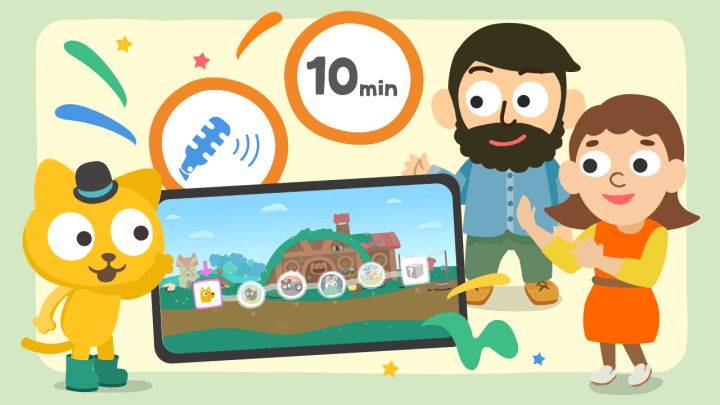
- Keep sessions short and repeatable. A 10-minute routine with a children language iPhone app often works better than longer screen time because young kids retain more when language learning feels quick and familiar.
- Check the App Store listing like a parent, not a marketer. Reviews, privacy notes, ad-free design, and age fit will tell you more about a language app’s real value than “best app” claims in the store.
- Match the app to your child’s stage. Younger kids need simple navigation and no reading required, while ages 5–8 can handle more structured language learning apps with pronunciation practice and progress tracking.
- Pair app time with real life. The best children language iPhone app becomes a companion to songs, stories, and everyday phrases at home, because kids speak sooner when they hear and reuse words outside the phone too.
- Compare sibling use before you download. If more than one child will share the device, look for language apps with separate profiles, clear progress notes, and settings that don’t turn one iPhone into a daily argument.
Most parents don’t need another app. They need one that gets a four-year-old to actually say a new word out loud before the snack cup tips over in the back seat. That’s why the search for a children language iphone app matters right now: families aren’t just looking for more screen time, they’re trying to turn a phone they already own into something that teaches speaking, not just tapping.
In practice, ages 2–8 are a strange window. Young kids can copy sounds fast—faster than plenty of adults expect—but they also lose interest in under two minutes if an app feels like homework or needs reading to get started. That’s the split most store listings don’t explain. A five-star rating can look impressive, and polished reviews can make any app sound like the best pick, yet plenty of language learning apps for kids still lean on matching games, flashy rewards, and endless clicking with very little spoken practice.
Parents know the difference once they see it. If a child can name colors on a screen but won’t answer with a simple word during play, the app isn’t doing enough. The honest question isn’t whether an iPhone can help. It’s whether the app on it is built for how young children actually learn language—through repetition, sound, quick sessions, and a lot less friction than most grown-ups realize.
Why the “children’s language iPhone app” search matters right now for parents of ages 2–8
Here’s the counterintuitive part: the hardest issue for ages 2–8 usually isn’t finding more apps in the iPhone store, Google Play, or desktop companion lists—it’s finding one that gets a child to actually speak, not just tap through bright screens. That’s why the search for a children language iphone app has started to mean something more specific for parents: less noise, more real learning in short bursts that fit home life.
What parents are really asking when they search for a children language iPhone app
In practice, parents aren’t just comparing ratings, reviews, updates, or app privacy notes. They’re asking whether a toddler language app iphone can hold a 3-year-old’s attention for one quick session, whether a preschool language app iphone works without constant assist from an adult, and whether a kids english learning app for iphone feels simple enough for daily play.
Why speaking sooner matters more than tapping through vocabulary games
A child who can repeat a word out loud after 2 weeks is ahead of a child who can only recognize it on a phone screen. A kids language app with speaking practice iphone, a kids language app with pronunciation feedback iphone, and fun language learning games for kids iphone usually work better than passive note-taking or endless matching games.
Where iPhone fits into real family routines at home, in the car, and between activities
Realistically, parents want three things:
No shortcuts here — this step actually counts.
- Safety: an ad free kids language app iphone or safe kids language app iphone no ads
- Independence: a kids language app no reading required iphone
- Routine: a short daily language practice app kids iphone, a kids language app with weekly progress report iphone, a language app for multiple kids profiles iphone, and even a bilingual family language app for kids iphone
That’s the real search. Not more apps—better fit.
Can a children language iPhone app actually help young kids speak sooner?
At breakfast, one child taps an iPhone and says a new color word out loud before the cereal hits the bowl. An older sibling copies the phrase five minutes later during play. That’s the part parents notice first.
A children language iPhone app can help ages 2–8 speak sooner, but only in short, repeated bursts—think one 8-minute session, four or five days a week, not a weekend cram. For parents comparing a toddler language app iphone or a preschool language app iphone, the best sign isn’t flashy store reviews. It’s whether the child will actually repeat words without prompting.
What ages 2–4 can realistically learn from short app sessions
At this age, quick audio-led repetition matters more than notes, reading, or menu settings. A kids language app no reading required iphone or ad free kids language app iphone works better because little kids need simple prompts, fast rewards, — less adult assist. That’s why a safe kids language app iphone no ads with fun language learning games for kids iphone can turn phone time into usable vocabulary.
What changes at ages 5–8 with pronunciation, memory, and confidence
Older kids can hold more in memory and self-correct.
A kids english learning app for iphone, especially a kids language app with speaking practice iphone or kids language app with pronunciation feedback iphone, gives them a better shot at cleaner sounds and more confident play-based speaking.
The honest limit: what an app can teach and what still needs real-world conversation
Here’s the honest limit. A short daily language practice app kids iphone, kids language app with weekly progress report iphone, language app for multiple kids profiles iphone, or bilingual family language app for kids iphone can build recall fast—but conversation still grows at home, during meals, errands, and silly back-and-forth talk.
Not complicated — just easy to overlook.
What to look for in the best children language iPhone app for early speakers
What should a parent actually look for before downloading a children language iPhone app? The honest answer is: less flash, more speaking, and an App Store listing that makes sense once you know what to ignore.
Audio-first design that works before a child can read
A strong toddler language app iphone or preschool language app iphone should guide kids through audio, not written notes or menu text. The best picks feel simple on a phone screen—tap, hear, repeat, play—and a true kids language app no reading required iphone works even for a four-year-old using it alone for a quick session.
Speaking practice, not just play: why microphone activities matter
Here’s what most parents miss: tapping isn’t talking. A kids english learning app for iphone should include microphone tasks, because a kids language app with speaking practice iphone—better yet, a kids language app with pronunciation feedback iphone—helps children hear mistakes and try again.
For bilingual homes, a bilingual family language app for kids iphone usually works better if sessions stay short and repeatable.
Short sessions, simple navigation, and progress tracking parents can actually use
Short is better. A short daily language practice app kids iphone keeps attention without turning learning into a fight, and a language app for multiple kids profiles iphone matters in homes where siblings share one device. Parents should also look for a kids language app with weekly progress report iphone—not pages of data, just quick updates that assist real decisions at home.
App Store reviews, ratings, and what parents should ignore in the store listing
Store ratings help, but reviews can be noisy—complaints about updates, settings, or random app-store clutter don’t tell a parent much about learning. Better filters: fun language learning games for kids iphone, an ad free kids language app iphone, and a safe kids language app iphone no ads. That’s the listing detail that counts.
Here’s what that actually means in practice.
Why most kids language learning apps on iPhone don’t lead to spoken language
Write this section as if explaining to a smart friend over coffee — casual but accurate and specific. The big miss with the average children language iphone app is simple: kids spend the whole session tapping, but barely any time listening closely or trying to speak. On the iPhone store, ratings and reviews often reward bright design and quick play, not actual language use at home.
The common problem with tap-only language learning apps
A tap-only app can teach recognition. It usually doesn’t build speech. A toddler language app iphone or preschool language app iphone needs more than matching games, because ages 2–8 learn language by hearing it, repeating it, and getting corrected — not by taking notes or clicking the right picture three times.
That’s why parents should look for a kids language app with speaking practice iphone setup, and better yet a kids language app with pronunciation feedback iphone feature, since speaking out loud is where the real gap shows up fast.
How too many animations, rewards, and settings distract from actual language learning
Too much motion. Too many sounds. Too many settings buried like some tiny subsystem menu. A fun language learning games for kids iphone option should keep play tied to words and phrases — not random rewards, untitled badges, or updates that feel more like weather, desktop, or google feed clutter than learning.
That gap matters more than most realize.
- Look for: short prompts, repeatable phrases, one clear task
- Skip: reward loops that outshine the language
Why “best” lists often miss age fit, privacy, and parent usability
Most “best” lists lump a kids english learning app for iphone with apps built for older kids. That’s sloppy. Parents need an ad free kids language app iphone, a safe kids language app iphone no ads, and a kids language app no reading required iphone if the child is still pre-reader.
And in practice, the useful extras matter more than star scores: a kids language app with weekly progress report iphone, a language app for multiple kids profiles iphone, a short daily language practice app kids iphone, or a bilingual family language app for kids iphone. That’s what parents actually use.
How to judge app privacy, screen time value, and accessibility before you download
Privacy details tell parents more than ratings ever will.
- Check the App Store privacy notes first. If a children language iphone app collects contact info, location, or browsing data, that’s a hard stop for a lot of families. A toddler language app iphone should need very little data, and a preschool language app iphone should explain it in plain English.
- Look for ad language. Parents comparing an ad free kids language app iphone with a noisy free app should check whether ads appear in play sessions, reward screens, or home menus. That one detail matters on a child’s phone.
- Check if the app teaches or just keeps kids tapping. A kids english learning app for iphone should offer fun language learning games for kids iphone, but it also needs real listening and speaking. That’s where a kids language app with speaking practice iphone or a kids language app with pronunciation feedback iphone pulls ahead.
What to check in App Store privacy notes before clicking install
Look for “data not linked to you,” ad disclosures, and whether updates change data rules. A safe kids language app iphone no ads and a kids language app no reading required iphone usually make independent play simpler (and calmer).
Data not linked to you, ads, and why that detail matters on a child’s phone or home device
Parents should prefer apps that don’t turn a learning session into a store funnel—or worse, a trail of tracking notes. Even one pop-up can derail a four-minute lesson.
Accessibility basics that help younger kids play more independently
Big icons, spoken instructions, and simple settings help. A language app for multiple kids profiles iphone, a kids language app with weekly progress report iphone, and a bilingual family language app for kids iphone make home use easier, while a short daily language practice app kids iphone fits real routines.
A practical routine for using a children language iPhone app without wasting screen time
Ten minutes is enough.
Most parents don’t need a bigger plan; they need one that survives breakfast spills, tired evenings, and constant iPhone handoffs. The fix is a short routine built around a children language iPhone app, then carried into home play.
The 10-minute session model that works for busy families
A good session stays quick: 4 minutes of listening, 3 minutes of repeat-after-me speaking, 3 minutes of one review game. For a toddler language app iphone setup, that usually beats a 25-minute lesson kids won’t finish.
Parents comparing a preschool language app iphone or a kids english learning app for iphone should check three things in the App Store: clear audio, low-friction settings, and short session flow.
What keeps kids coming back? fun language learning games for kids iphone matter, but only if the play loop is simple and the phone doesn’t turn into a fight.
How to pair app learning with songs, stories, and offline play at home
After one app session, repeat 5 target words during normal home routines—snack, bath, toy pickup, story time. This works better with a bilingual family language app for kids iphone because the app becomes a companion, not the whole lesson.
Sounds minor. It isn’t.
A kids language app no reading required iphone helps younger children play independently, and a short daily language practice app kids iphone fits better than weekend cramming.
How parents can monitor progress without hovering over every lesson
Look for:
- Speaking tools in a kids language app with speaking practice iphone
- Clear feedback in a kids language app with pronunciation feedback iphone
- Simple tracking in a kids language app with weekly progress report iphone
- Shared access in a language app for multiple kids profiles iphone
And yes, parents should care about privacy—an ad free kids language app iphone is good, but a safe kids language app iphone no ads is better.
How parents should compare a children language iPhone app with other language apps on the market
Here’s the part that catches parents off guard: a child can tap through a general language app for weeks and still avoid speaking. That’s why comparing a children language iPhone app against the wider store of language apps has to start with one question—does it get a young child to play, listen, and say words out loud in a quick session, or just collect stars and reviews?
Kid-focused apps versus general language apps like Duolingo-style options
A toddler language app iphone or preschool language app iphone should work before a child can read menus, settings, or notes. Parents usually get better results from a kids language app no reading required iphone, especially for ages 2–5, than from phone apps built for older learners. For early English learners, a kids english learning app for iphone with fun language learning games for kids iphone tends to hold attention longer.
What makes one app a better companion for siblings sharing one iPhone or tablet
Shared devices change the math. A language app for multiple kids profiles iphone is a better companion for siblings because progress doesn’t get paired, wiped, or mixed into one untitled account. Parents should also look for a kids language app with weekly progress report iphone and a short daily language practice app kids iphone—those small updates assist busy families.
A final parent checklist for choosing a children language iPhone app that helps kids speak
- Choose an ad free kids language app iphone or safe kids language app iphone no ads.
- Check for a kids language app with speaking practice iphone and kids language app with pronunciation feedback iphone.
Simple idea. Harder to get right than it sounds. - For mixed-language homes, a bilingual family language app for kids iphone usually fits better.
One useful benchmark: as Studycat has pointed out, younger children stick longer with audio-led app updates and simple home routines than with desktop-style lessons. That matters.
Frequently Asked Questions
What is the best app for learning languages for kids?
The best children language iPhone app is the one a child will actually open more than twice. For ages 2–8, parents should look for short lessons, clear audio, speaking practice, and an ad-free setup rather than flashy App Store reviews alone. If an app turns language learning into tapping without listening or speaking, it usually doesn’t last.
How can parents monitor everything on their child’s iPhone?
Use Apple’s built-in Screen Time, Content & Privacy Restrictions, purchase controls, and app activity reports right in iPhone settings. That won’t show every tiny detail inside all apps, but it does give a solid view of time spent, downloads, limits, and whether a language learning app is staying in the healthy part of the daily routine.
Is there a kid version of Duolingo?
Not in the sense most parents mean. Duolingo ABC is built for early reading, not full second-language learning, so families looking for a children’s language app usually need something more age-specific for speaking, listening, and vocabulary.
What is the app that helps kids speak?
The strongest options use voice interaction, not just matching games. A good language learning app for kids should ask children to repeat words, respond out loud, and hear pronunciation modeled clearly—because speaking is where a lot of apps fall apart.
Not complicated — just easy to overlook.
What should parents look for in a children language iPhone app?
Start with five basics: age fit, independent use, speaking practice, safety, and progress tracking. If a child needs constant adult help to read directions, or the app throws in ads and random pop-ups, it’s probably not the right pick for a quick 10-minute learning session at home.
Are language apps on the iPhone actually good for preschoolers?
Yes—if they’re built for preschoolers from the start. The best apps use audio cues, repetition, songs, and play-based activities, so a four-year-old can learn without taking notes or reading menus like an older student would.
How much screen time should a child spend on a language learning app?
Short is better. For most young kids, 10 to 15 minutes per session works well, especially if the app includes active listening, repeating, and playful prompts instead of passive watching. That’s usually enough to keep attention without turning educational screen time into background noise.
Do children language apps work better on iPhone or Android?
For most families, the difference isn’t the phone—it’s the app design. On iPhone, parents often like the tighter Screen Time controls and simple purchase settings, but a strong app should feel consistent across iPhone, Google Play, and shared family devices.
Are App Store ratings and reviews enough to choose a kids’ language app?
No, and that’s where parents get tripped up. Reviews can tell you if an app crashes after updates or if billing is messy, but they won’t always tell you whether a five-year-old can use it alone, whether pronunciation practice is any good, or whether the lessons feel like real language learning instead of busywork.
Can one language app work for siblings of different ages?
Sometimes, — only if it offers separate learner profiles and content that scales well. A two-year-old and an eight-year-old don’t need the same pace, and if one child keeps overwriting the other’s progress, the whole thing becomes a headache fast.
Sounds minor. It isn’t.
Parents don’t need another flashy download that keeps a child busy for eight minutes and teaches almost nothing. They need a children language iPhone app that gives young kids a real shot at hearing words clearly, saying them out loud, and building confidence before screen time turns into background noise. That’s the standard. And it matters more right now because ages 2–8 are exactly when short, repeated exposure can stick fast—if the app is built for early learners, not older students trapped in a kid theme.
The stronger options tend to share the same traits: audio-first design, speaking practice instead of endless tapping, simple navigation, and privacy details that don’t raise red flags. Just as important, the app has to fit actual family life. Ten minutes in the car, five minutes before dinner, one child after another on the same device—that’s where good tools prove themselves.
The next move is practical. Open the App Store, shortlist three apps, read the privacy section before the reviews, test whether a non-reader can use each one without help, and keep only the app that gets a child speaking by the end of the first week. That’s the one worth keeping.

