Key Takeaways
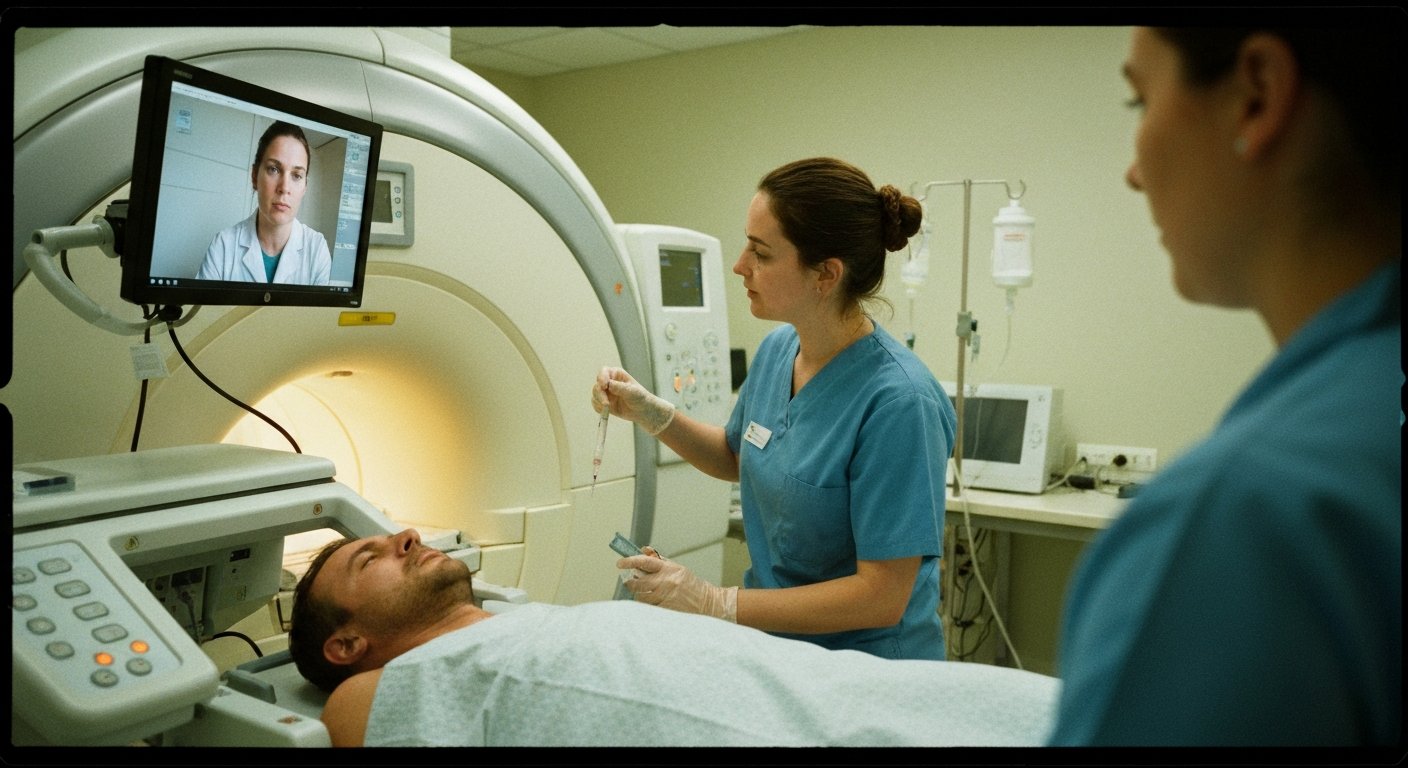
- CMS permanently adopted virtual direct supervision for diagnostic tests, including contrast-enhanced CT and MRI, effective January 1, 2026.
- Facilities must maintain audit-ready documentation for every Medicare-billed procedure, including automated session logs that verify real-time, two-way audiovisual communication.
- Compliance requires HIPAA-compliant platforms with simultaneous audio and video capabilities; standard phone calls or consumer-grade applications do not satisfy federal standards.
- Professional standards from the American College of Radiology (ACR) align with federal rules, requiring physician-led oversight and accredited on-site personnel trained in emergency response.
- Non-compliance risks include the recoupment of professional and technical fees, often extending through a multi-year audit “look-back” period.
Virtual contrast supervision has moved from temporary pandemic-era flexibility into a permanent federal mandate. Imaging center administrators now operate under standards that require a combination of clinical precision and meticulous record-keeping. Now, success depends on understanding how CMS billing requirements intersect with ACR professional guidelines.
The Permanent Status of Virtual Contrast Supervision
The CMS 2026 permanent rule establishes virtual direct supervision as a standard of care for diagnostic imaging. Effective January 1, 2026, imaging centers have commenced billing Medicare for contrast-enhanced procedures supervised remotely, and are mandated to meet specific technical and documentation benchmarks.
This permanent status eliminates the uncertainty of annual extensions, allowing for long-term operational planning and investment in remote infrastructure. The shift is supported by clinical data showing that virtual models maintain patient safety while improving access to care, particularly in regions facing acute radiologist shortages.
The rule directly addresses staffing challenges that have historically forced rural and community imaging centers to cancel exams or delay patient care due to the lack of an on-site radiologist. By utilizing virtual models, these facilities can extend operating hours into evenings and weekends, maximizing equipment utilization without the unsustainable cost of on-site physician coverage.
Required Documentation for CMS Audit Readiness
CMS auditors evaluate documentation through a systematic lens, where missing data points can lead to the denial of claims even if the clinical outcome was successful. Every virtually supervised contrast exam requires a record that establishes three core elements: physician availability, compliant technology delivery, and prepared on-site response.
Documentation must identify the supervising radiologist by name for each procedure and verify that a bi-directional audiovisual connection was maintained. Automated session logs from specialized platforms provide the most robust defense during an audit, as they capture connection start times, total duration, and technology function without the risk of manual entry errors.
Furthermore, any adverse events or physician interventions during a procedure require detailed clinical notes. These records must capture the nature of the reaction, specific instructions provided by the remote physician, and the subsequent actions taken by the on-site team. Even precautionary guidance provided by the physician should be logged to demonstrate the “immediate availability” required by federal law.
Automated Compliance vs. Manual Risks
CMS mandates specific technology standards that prioritize real-time interaction and security. Supervision platforms must provide simultaneous, two-way audio and video communication between the supervising physician and the imaging suite. Audio-only communication or one-way video monitoring fails to meet the federal definition of “direct supervision”.
Relying on manual record-keeping or consumer-grade communication tools introduces significant audit risk. Standardized, industry-vetted platforms are designed to encrypt all communications and automatically generate time-stamped logs. These systems ensure that the supervising physician is reachable within seconds during the entire contrast administration and monitoring period, satisfying the “immediately available” standard.
For administrators, the choice of technology is a primary factor in risk mitigation. Platforms built specifically for clinical oversight address the documentation burden by integrating credential verification and session tracking into the workflow, protecting the facility’s reimbursement stream from the outset.
ACR Guidelines and Clinical Competency
The American College of Radiology supports virtual supervision through professional guidelines that mirror CMS requirements, creating a unified framework for facilities. This alignment ensures that a facility meeting federal billing standards is also adhering to professional best practices.
ACR standards specify that virtual supervision must be performed by specialized physicians. The supervising radiologist must have the appropriate expertise in contrast media and maintain an active license in the state where the facility is located. This ensures that the remote oversight is clinically equivalent to on-site presence.
On-site staff requirements are equally rigorous. At least one professionally trained clinical staff member must be present to perform patient assessments and recognize the signs of a contrast reaction. Following the ACR-AAAAI 2025 consensus, these individuals must be accredited to administer emergency medications, including the immediate use of epinephrine for severe reactions, under standardized institutional protocols. These capabilities ensure an effective emergency response when guided by remote physician communication.
Financial Exposure and Non-Compliance Risks
The consequences of a failed CMS audit extend far beyond the loss of a single claim’s revenue. Medicare reimbursement recoupment is the primary risk, where the government can demand repayment for all claims within a multi-year “look-back” period if documentation is found to be insufficient.
Federal standards require Medicare Fee-for-Service providers to retain these records for six years, while Medicare Advantage providers face a ten-year retention mandate. For high-volume imaging centers, a systematic failure in documentation can lead to hundreds of thousands of dollars in financial exposure, excluding potential interest and penalties.
Additionally, imaging providers must navigate state-level regulations. While CMS permits virtual supervision federally, certain state laws may still require physical presence for specific procedures. Multi-site networks must address these varying frameworks to ensure that their virtual contrast supervision pricing and operational models remain compliant across all jurisdictions.
Expert Insight on Operational Excellence
Maintaining compliance in 2026 necessitates a shift from manual oversight to automated, data-driven systems. An evidence-based approach to supervision provides the clinical authority and reliability necessary to manage these requirements.
Beyond simple oversight, modern standards prioritize agent-specific documentation in the electronic health record (EHR) to prevent future adverse events and ensure a defensible audit trail.
By utilizing standardized, regulatory-compliant processes, imaging centers can eliminate the documentation gaps that lead to audit failures. Response times measured in seconds ensure that patient safety is maintained while providing the “immediate availability” that federal reviewers expect. This level of expertise allows imaging facilities to extend their hours, reduce cancellations, and scale their operations with the confidence that their compliance and revenue remain protected.
Note: Information provided is for general guidance only and does not constitute medical, legal, or financial advice. Pricing estimates and regulatory requirements are current at the time of writing and subject to change. For personalized consultation on imaging center operations and virtual contrast supervision, contact ContrastConnect.
ContrastConnect
Las vegas
Las Vegas
NV
89109
United States