NEW YORK CITY, NY / ACCESS Newswire / April 22, 2026 / From April 14 to 16, 2026, the United Nations Economic and Social Council (ECOSOC) Youth Forum convened at the United Nations Headquarters in New York.
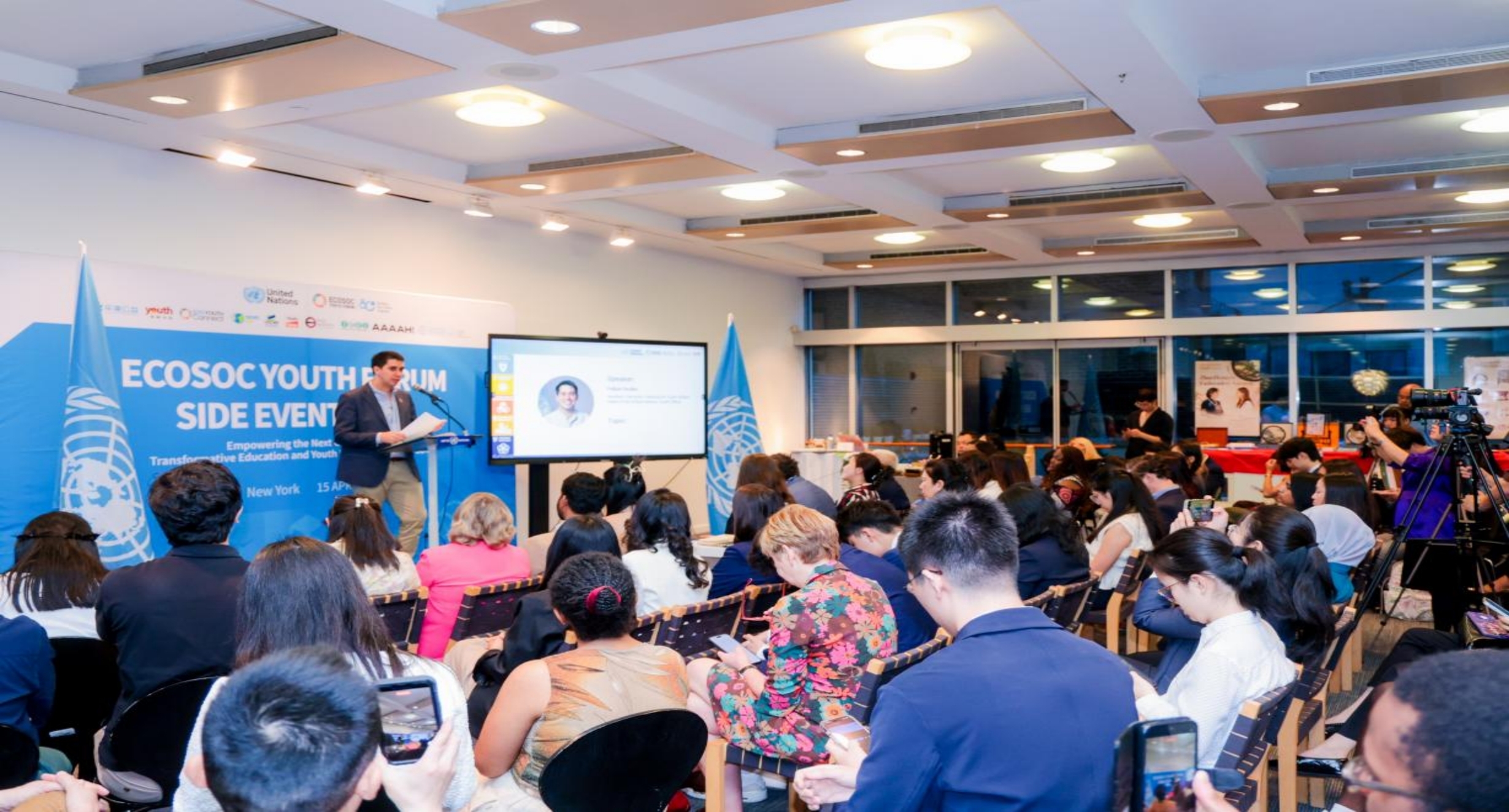
At 6:00 PM on April 15, a high-level side event titled “Empowering the Next Generation: Transformative Education for the SDGs and Youth Innovation” was successfully held at the Scandinavia House in Manhattan. This collaborative initiative was jointly supported by the Global Youth Philanthropy (GYP), International Council of Environmental Law (ICEL), AAAAH, the Columbia Global ESG Leadership Association, Mindful Peace International, Luminary, and the Peaceland Foundation.
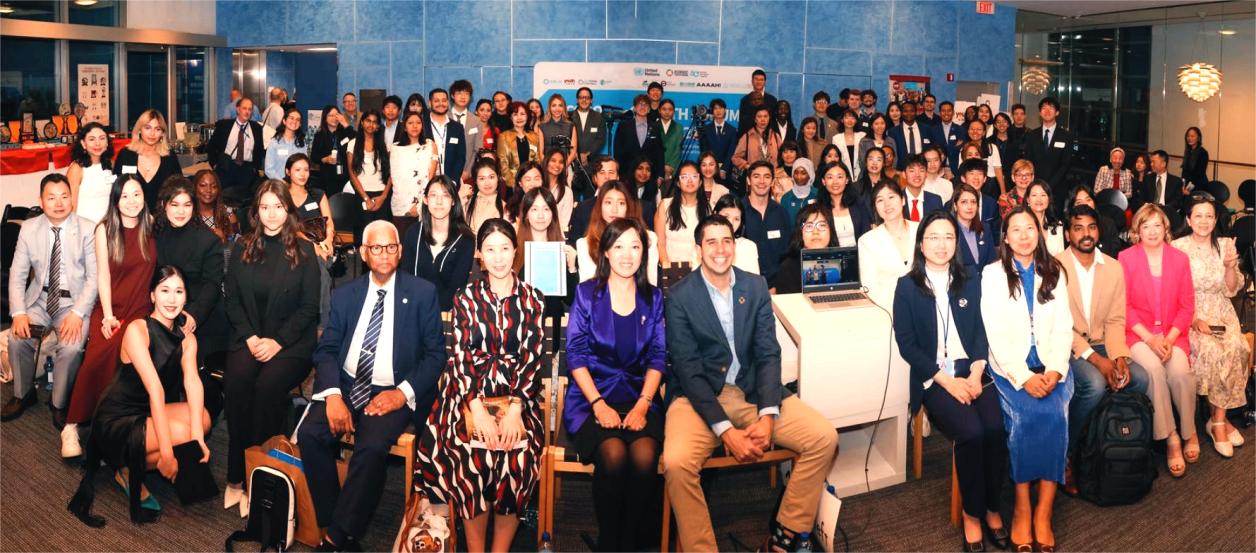
The event featured addresses from over twenty representatives of international organizations, including Dr. Felipe Paullier, UN Assistant Secretary-General for Youth Affairs; Mr. Seizo Onoe, Director of the ITU Telecommunication Standardization Bureau (TSB); and Ms. Minji Kwag, Analyst at the UNDP Human Development Report Office (HDRO). They were joined by youth delegates from Belgium, Japan, the United States, Canada, and China. Nearly 200 participants, including UN officials, industry leaders, academic experts, and youth leaders representing 146 institutions across 46 countries from six continents, were in attendance.
Throughout the three-day summit, youth delegates engaged in high-level dialogues within the UN Trusteeship Council Chamber and held strategic briefings at the UNDP Human Development Report Office (HDRO). A “World Café” style ministerial breakfast provided a rare platform for direct exchange between youth leaders and ministers of youth affairs, aimed at integrating youth voices into the “DNA” of national policymaking.
Setting Out: Redefining “Participation” at the Core of Power
On April 14, with the formal opening of the ECOSOC Youth Forum, the youth delegation entered the Trusteeship Council Chamber at the UN Headquarters in New York.
In this hall, which once determined the fate of many nations, youth are no longer mere spectators. The forum sent a powerful signal: youth are not just “beneficiaries” or “sources of inspiration” for policy; they are “co-creators.” Through profound dialogues on SDG 6 (Clean Water), SDG 7 (Renewable Energy), and SDG 9 (Innovative Infrastructure), the realization was clear: the power of innovation knows no generational divide, and the courage to change requires no specific origin.
Crossing Boundaries: From Ministerial Tables to the Blueprint of Human Future
On the morning of April 15, a Ministerial Breakfast commenced at the UN Headquarters. In an interactive session, youth delegates sat side-by-side with ministers of youth affairs from various nations. This was more than a breaking of hierarchies; it was a collision of cultures and ideas. Participants discussed utilizing digital technology for social mobilization and explored ways to authentically integrate youth voices into the “DNA” of policymaking, moving beyond peripheral “consultation.”
Subsequently, the youth delegation visited the UNDP Human Development Report Office (HDRO). Inside the UNDP offices, they gained in-depth insights into the 2025 Human Development Report. In this era of polycrisis, the delegates emphasized the need to reconnect humanity with nature and bridge inequalities through technology and education.
The Main Chapter: Official Side Event-A Symphony of Ideas at the Scandinavia House
At 6:00 PM on April 15, the side event “Empowering the Next Generation: Transformative Education for the SDGs and Youth Innovation” was held at the Scandinavia House in Manhattan, with Eleven86 Real Artesian Water providing drinking water.
Under the moderation of Conor McCutcheon, Board Member of Global Youth Philanthropy, over twenty speakers wove a transnational dialogue with their insight.
1. Strategic Opening: Digital Pioneers and Educational Vision
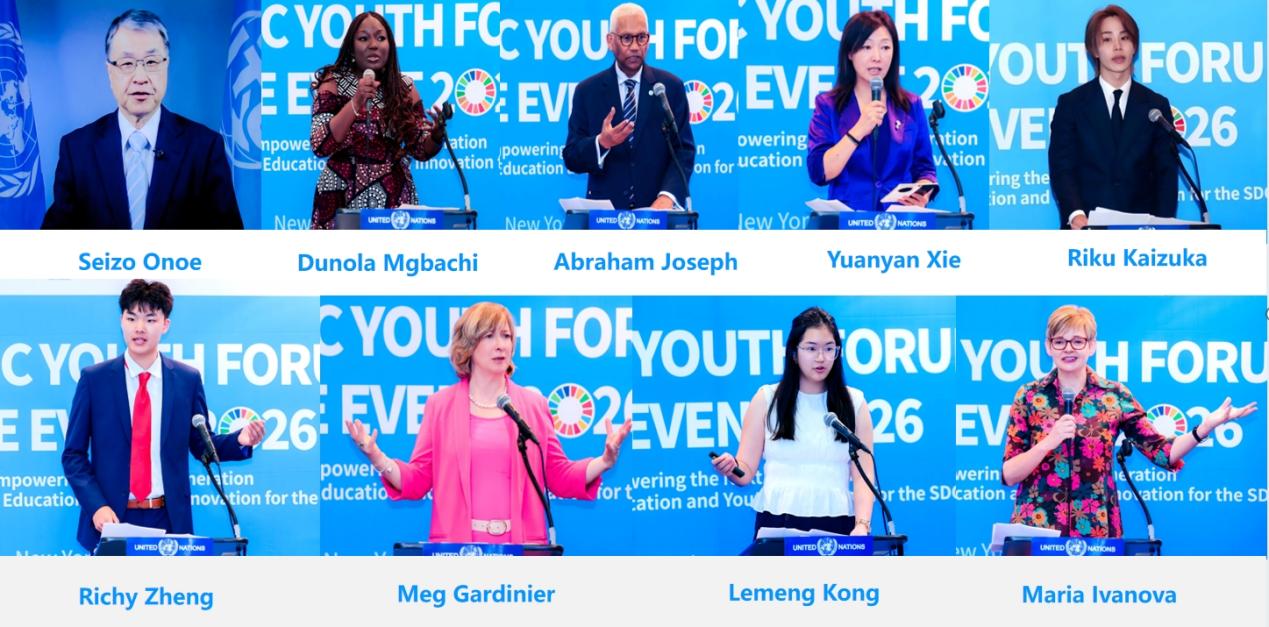
Seizo Onoe, Director of the ITU Telecommunication Standardization Bureau (TSB), highlighted youth as the definers of digital solutions, while Dunola Mgbachi, ITU Youth Lead, cited the Generation Connect initiative as a model for youth-led digital regulation.
Dr. Abraham Joseph (Former UN Senior Advisor), and Ms. Sherry (Yuanyan) Xie (Founder of Global Youth Philanthropy, GYP) addressed the necessity of sustainability literacy and borderless empowerment platforms designed to provide the capital and technology boosters required to scale youth-led visions. Sherry stated that while inspiration is precious, it cannot flourish without global partnerships. She called for the construction of a borderless youth empowerment platform where every vision to change the world can receive the “boosters” of technology and capital.
2. Green Transition: From Climate Literacy to Systemic Change
Riku Kaizuka (GYP representative) interpreted Japanese aesthetics through a sustainability lens, contrasting the long-term view of “harmony with nature” in traditional culture with the short-sightedness of modern fast fashion, sparking resonance on cultural preservation and environmental justice.
From the NGO’s perspectives, Ms. Meg Gardinier (Secretary-General, ChildFund Alliance) introduced the “Grow the Future” green skills knowledge hub, emphasizing that in an era of climate volatility, youth must be empowered with dignity and livelihoods through skills training to become leaders in environmental adaptation. Professor Maria Ivanova (Northeastern University) advocated for an “intergenerational co-governance” mechanism to ensure youth ideas are transformed into sustainable institutional systems.
As a youth representative, Lemeng Kong revealed the “human cost” behind fast fashion and called for “empathy-based” collective action to redefine the relationship between humans and objects. Whereas Richy Zheng presented scientific results on optimizing air quality monitoring using Gaussian Processes, advocating that environmental literacy should not be a privilege of the few, but a tool for marginalized communities to gain a voice in environmental discourse.
3. Digital Future: AI Ethics and Cultural Roots
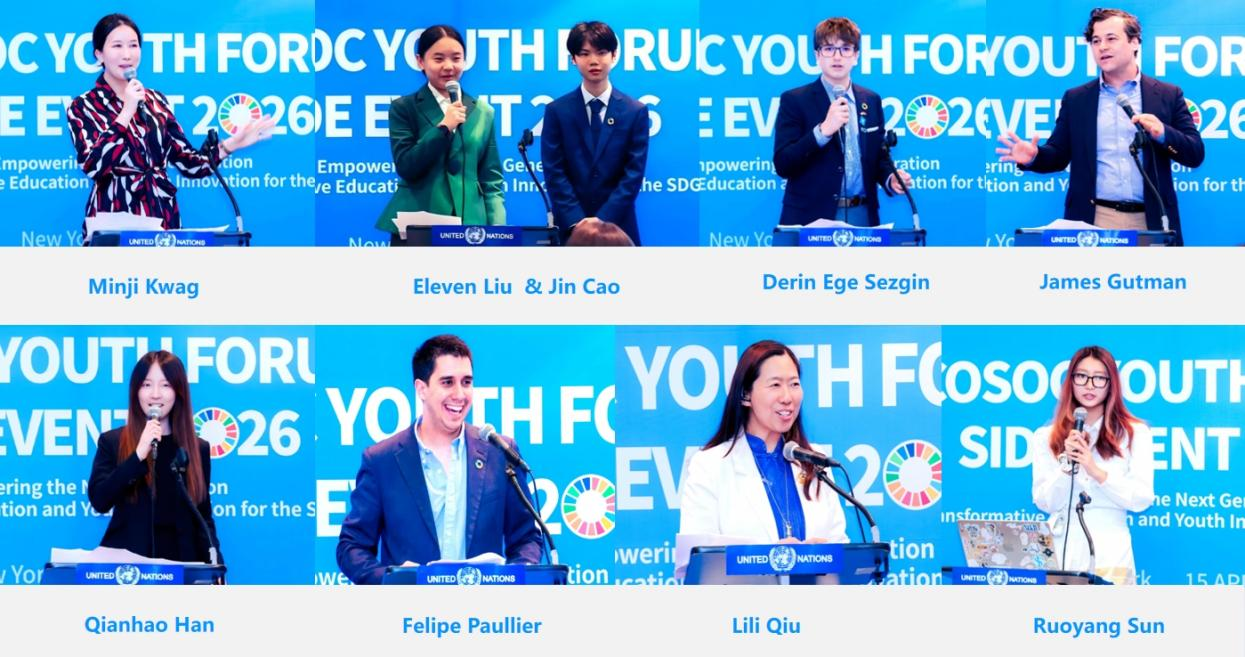
To start this session, Ms. Minji Kwag (Senior Analyst, UNDP HDRO) presented global evidence from the 2025/2026 Human Development Report, discussing how AI measures human potential and stressing that AI should be a lever to enhance human capabilities rather than a gap that widens inequality.
Eleven Liu and Jin Cao, winners of the 2025 SDG Hackathon co-organized by GYP and ITCCC, introduced their “Wear More” fashion manifesto, which leverages modular clothing design to challenge the culture of consumerism. Shifting the focus to digital ethics, Derin Ege Sezgin, Founder of SDG Youth Connect, advocated for youth leadership in AI governance, emphasizing that young people must act as rule-makers to mitigate algorithmic bias. Additionally, James Gutman, Senior Analyst at S&P Global, shared leadership insights through the stories of two Canadian youth entrepreneurs, encouraging innovation in the clean energy sector.
Qianhao Han is the Founder and CEO of Tech2gether; Initiator of the OneAI Youth International Conference and the NLOH Project, with a focus on digital cultural heritage preservation. She showcased the “New Light, Old Heritage” (NLOH) project. Her presentation highlighted the use of digital innovation to revitalize endangered cultural legacies, bridging the gap between ancient traditions and modern technology.
In the closing address, Dr. Felipe Paullier (UN Assistant Secretary-General) reflected: “The question is not whether young people are ready, but whether our institutions are willing to demonstrate true openness.” He identified youth as architects of solutions and called for a shift from marginal “consultation” to core “autonomous decision-making.” Ms. Lili Qiu (Founder, Peaceland Foundation) concluded that every case showcased was a powerful response to the 2030 Agenda, expressing firm confidence in achieving peace and development through youth innovation.
Craftsmanship: Intangible Heritage on the Needle, Future in the Fingertips
During the post-event social reception and charity auction, a “cultural dialogue” captivated the audience.
Ruoyang Sun, a Su Embroidery inheritor and “Ambassador for the Public Promotion of Chinese Intangible Cultural Heritage,” showcased the treasure of Su Embroidery. She eloquently explained the link between traditional craft and SDGs: every stitch and thread reflects the harmony between humanity and nature.
During the dinner, Sun interacted with Dr. Felipe Paullier, presenting a double-sided embroidery fan to the UN Youth Office. The image of the panda symbolized harmony between peace and biodiversity. Dr. Paullier expressed his sincere appreciation, noting how Chinese youth perfectly integrate deep historical heritage with contemporary social responsibility.
The masterworks on display, such as “Ancient Landscapes,” “Jiangnan Water Town”, and “Everything Goes Well,” showcased the “poetic dwelling” vision of Eastern culture. Sun called on global youth to “protect cultural roots to protect our shared human future.” Proceeds from the subsequent charity auction of silk scarves and panda bookmarks will support future youth innovation projects.
Witness: When Youth Voices Resonate at the UNHQ
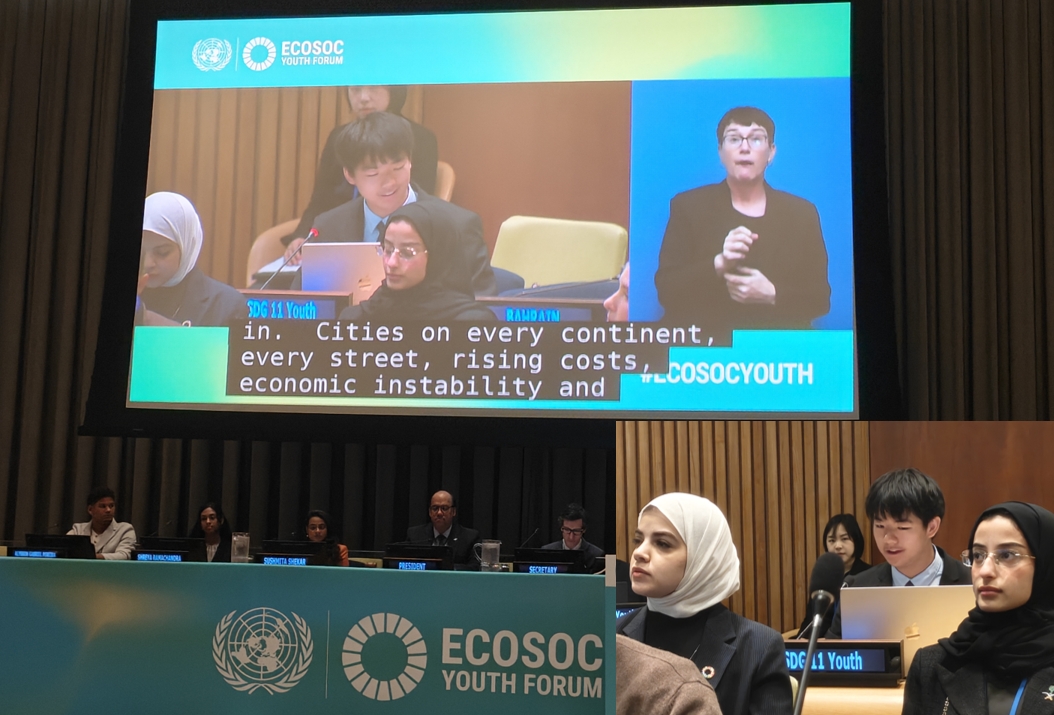
On April 16, Richard Da, representing Global Youth Philanthropy, delivered a thought-provoking speech at the Trusteeship Council Chamber, UN Headquarters.
Regarding SDG 11 (Sustainable Cities and Communities), he used a personal story to highlight that “communities are not resilient if housing security is unstable.” He called for affordable housing to be viewed as infrastructure rather than just charity. His slogan, “No Home Left Behind,” resonated throughout the hall, leading senior UN officials to seek further collaboration with him to raise awareness among policymakers.
Conclusion: 2030-We Are the Writers and the Partners
This ECOSOC Youth Forum has led us to reflect: inspiration is often a momentary spark, but only by transforming that spark into technology, policy, and partnerships can lasting change be achieved.
Global Youth Philanthropy believes that every young person possesses a heart to change the world. We are not just waiting for the future; we are creating the “now.” As stated by many UN officials at the event, the key to the 2030 Agenda is not whether young people are ready, but whether existing institutions are willing to stand side-by-side with them in true openness.
The stars and the sea lie ahead, but the path is beneath our feet. The blueprint for 2030 awaits our collective hand.
Media Contact:
Contact Person: Iris Song
Email: info@gypleader.org
SOURCE: Global Youth Philanthropy
View the original press release on ACCESS Newswire